Why Your Skin Isn’t Improving (Even With Expensive Skincare)
Why Your Skin Isn’t Improving (Even With Expensive Skincare)
You’ve invested in premium serums, perfected your routine, and followed every trending skincare tip—yet your skin still feels unchanged. As a physician, I see this pattern frequently. The issue is rarely effort; it’s the biological ceiling of what topical skincare can achieve.
If your results have plateaued, it’s not failure—it’s physiology.
The Barrier Problem: Why At-Home Products Have Limits
Your skin’s outermost layer, the stratum corneum, is designed to protect—not absorb. While ingredients like retinol, vitamin C, and acids are clinically effective, their penetration is intentionally limited for safety.
Most at-home formulations have larger molecular structures, meaning they act primarily on the epidermis. However, concerns like collagen loss, deep pigmentation, and acne scarring originate in the dermis. This creates a mismatch—your products are working, but not where the real problem exists.
Why Expensive Skincare Isn’t Always Enough
Cost often reflects formulation quality and branding—not depth of action. Layering multiple actives can sometimes worsen skin health by disrupting the barrier, leading to sensitivity, inflammation, or breakouts.
More importantly, no topical—regardless of price—can mechanically stimulate collagen or restructure damaged tissue. This is where patients begin to feel “stuck.”
The Physics of Real Skin Rejuvenation
Clinical treatments introduce controlled micro-injury to activate the skin’s repair mechanisms.
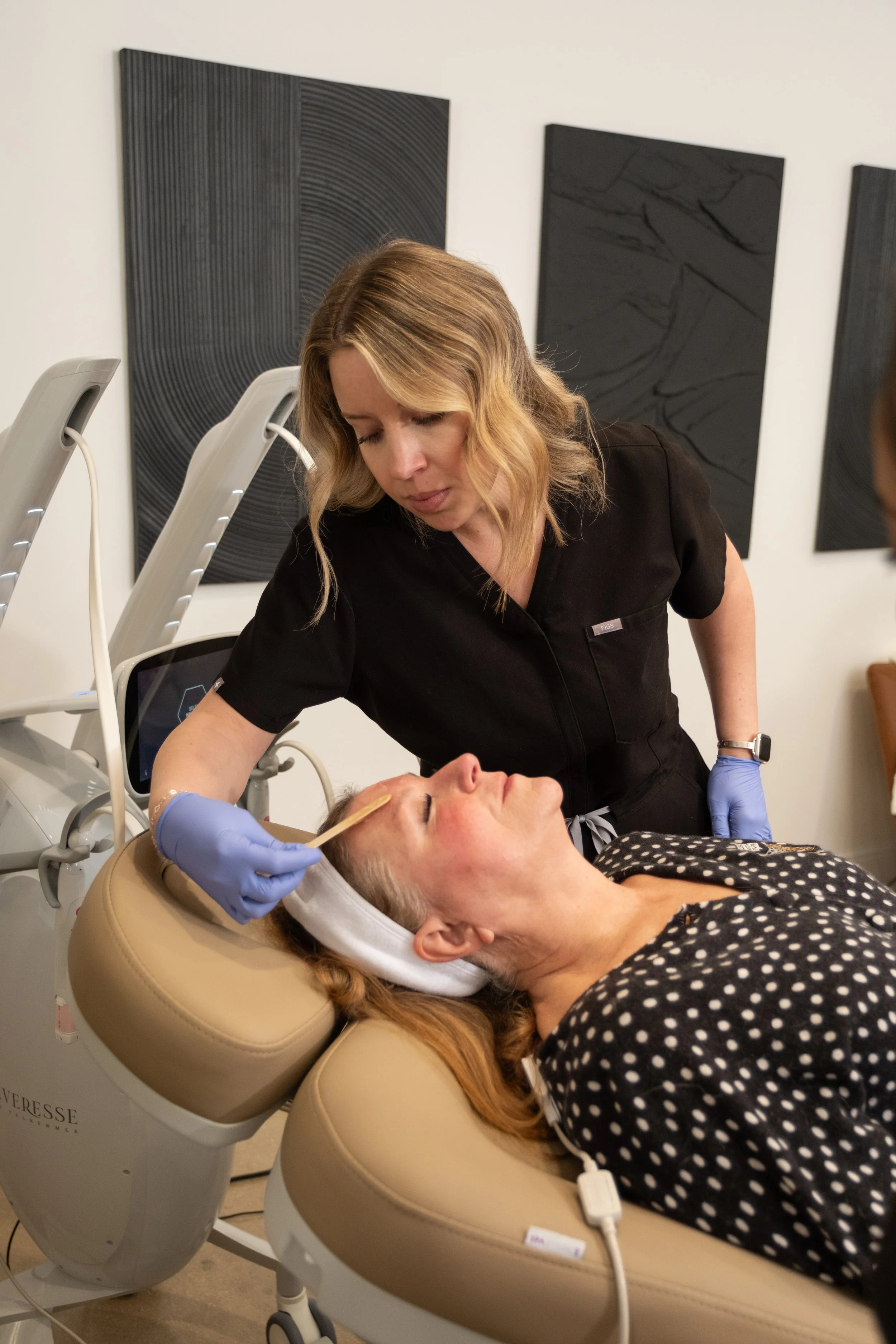
Procedures like microneedling create precise micro-channels that stimulate collagen and elastin production. Medical-grade chemical peels penetrate deeper due to lower pH levels, accelerating cell turnover beyond what home exfoliants can achieve. Laser and light-based therapies target pigment and vascular concerns at specific depths.
These approaches bypass the surface barrier and activate cellular processes that topical skincare alone cannot initiate.
When You Need Professional Intervention
If you’ve followed a consistent routine for 8–12 weeks (two full skin cycles) with minimal improvement, it’s time to reassess.
Professional treatments are particularly effective for:
Acne scars that require structural remodeling
Persistent pigmentation such as melasma
Fine lines and early skin laxity
Chronic redness or uneven texture
The Real Solution: Combining Skincare + Treatments
Optimal results come from synergy—not substitution.
Think of in-clinic treatments as the “correction phase” and your skincare routine as the “maintenance phase.” Procedures enhance skin receptivity, improve penetration, and create the conditions for your products to work more effectively.
This combined approach delivers both immediate improvement and long-term skin health.
Final Takeaway
Skincare is foundational—but it has limits. When your skin stops responding, it’s often a sign that deeper intervention is needed. Understanding when to transition from products to procedures is what transforms your results.
Ready to Upgrade Your Skin Routine?
Book a consultation today with Core Aesthetic and get a personalized, physician-guided plan that combines advanced treatments with targeted skincare—for results that actually last.